



Camping Around Lake Geneva
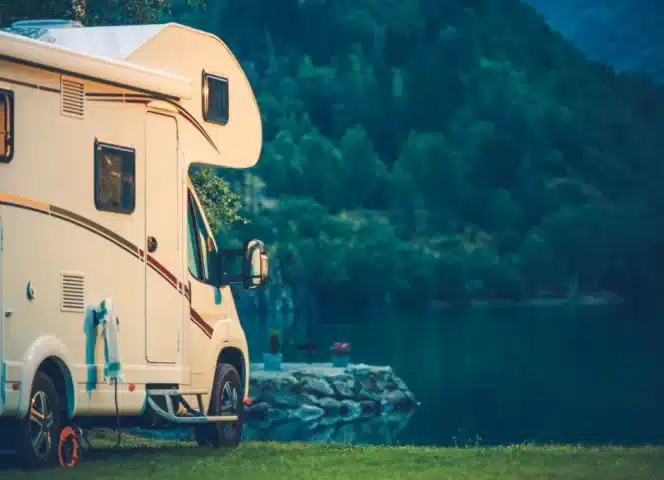
Camping in Switzerland: A Highly Regulated Practice
What Is Wild Camping?
In this article, wild camping refers to spending the night in a camper van, motorhome, or car outside official campsites or designated motorhome parking areas.
Is Wild Camping Allowed in Switzerland?
In Switzerland, wild camping is not explicitly prohibited by federal law, but it is subject to many restrictions. Regulations are defined at the cantonal level, and the final decision always lies with the municipalities, which may introduce their own rules and ordinances.
For this reason, it is essential to check local regulations before settling in for the night. The Swiss Touring Club (TCS) recommends playing it safe and seeking information directly from:
the local municipality,
the tourist office,
or the local police station.
Why Is Wild Camping Often Prohibited?
Restrictions are mainly intended to:
protect nature and wildlife,
maintain public order and peace,
ensure campers’ safety.
Spending the night outdoors in Switzerland can involve real risks, such as sudden storms, falling trees, heavy rainfall, flooding rivers, mudslides, or encounters with livestock and wild animals.
Fortunately, Switzerland offers an excellent alternative: more than 400 campsites and over 200 motorhome areas, covering all price ranges and comfort levels. This extensive network allows travelers to enjoy the region safely and responsibly.
Where to Camp in Switzerland Around Lake Geneva
Canton of Geneva
The canton of Geneva has three campsites, including the well-known TCS Camping Geneva–Vésenaz, ideally located on the shores of Lake Geneva.
A major advantage is the Léman Express, which provides fast and convenient access to public transport throughout the Greater Geneva cross-border region.
Léman Sans Frontière sites to visit:
Yvoire and the Garden of the Five Senses
Lake cruises with CGN (Compagnie Générale de Navigation)
Canton of Vaud
The canton of Vaud offers 38 campsites, located along the lake and in the surrounding countryside.
Must-see attractions:
Blonay–Chamby Heritage Railway
Travel is easy thanks to the Nyon–St-Cergue–Morez railway, Chablais public transport, and the MOB GoldenPass panoramic train.
Canton of Valais
With 42 campsites, Valais is a prime destination for mountain lovers and outdoor enthusiasts.
Nearby attractions include:
Le Kuklos rotating restaurant (Leysin)
Canton of Fribourg
The canton of Fribourg offers 8 campsites, set in a region rich in both nature and heritage.
To discover:
Useful websites for planning a stay include pincamp.ch and aupaysducampingcar.ch.
Camping in France: Freedom Within a Legal Framework
What Does French Law Say About Wild Camping?
In France, wild camping and bivouacking are regulated by Article R111-32 of Decree No. 2015-1783 of 28 December 2015.
In principle, camping is permitted with the landowner’s consent, but numerous restrictions apply.
Where Is Wild Camping Prohibited?
Camping is not allowed:
in natural reserves, protected parks, and heritage sites,
on roads and public highways,
along seashores,
within 200 meters of drinking water supply points,
within 500 meters of a listed or registered historical monument.
Local authorities and prefectures may also impose temporary or permanent bans through municipal or regional decrees, which are usually posted at town halls or prefecture buildings.
In practice, these rules mainly target long-term installations. A discreet overnight bivouac may sometimes be tolerated, provided local regulations are respected and environmental impact is minimal.
Where to Camp on the French Side of Lake Geneva
Haute-Savoie
Haute-Savoie offers more than 100 campsites, listed on campingfrance.com.
Nearby Léman Sans Frontière attractions:
Mechanical Music Museum (Les Gets)
Palais Lumière (Évian)
Ain and Jura
The Ain department has 56 campsites, while the Jura counts 58 campsites, offering a perfect blend of nature, heritage, and wellness tourism.
To visit:
Fort des Rousses
Divonne-les-Bains
With its lake, mountains, cultural cities, and preserved natural areas, the Lake Geneva region is a perfect destination for camping, on both the Swiss and French sides of the border. As long as campers respect the regulations specific to each country, canton, and municipality, they can fully enjoy this unique cross-border region—where nature truly knows no borders.