


What are the natural reserves on Lake Geneva?
- The Crénées
- Les Grangettes
- The Gulf of Coudrée
- The Dranse Delta
- Pointe-à-la-Bise
THE CRÉNÉES
The smallest of the natural reserves is Les Crénées, located in the municipality of Mies between Nyon and Geneva. It covers just under 2 hectares (about four football fields). The reserve consists of a lagoon, a wetland area, and a wooded zone, providing shelter to more than 60 species of birds, as well as amphibians and mammals.
LES GRANGETTES
The largest natural reserves is Les Grangettes, situated at the mouth of the Rhône River. Nearly two-thirds of all bird species recorded in Switzerland have been observed in its forests and marshes. The reserve is home to many threatened species and represents a vital green lung for biodiversity in the region.
THE GULF OF COUDRÉE
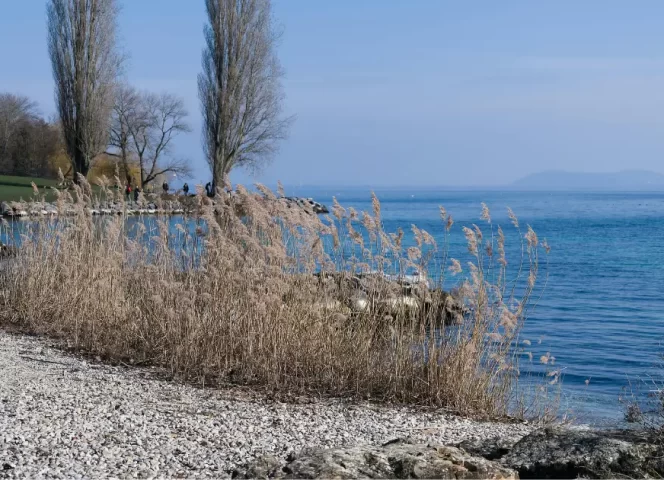
The Gulf of Coudrée, located in the municipality of Sciez, is a nature reserve composed of a wet meadow, marshes, reed beds, and a boxwood forest over 400 years old. This unique plant ecosystem, rare in Europe, offers a captivating sight, particularly for amateur birdwatchers.
THE DRANSE DELTA
The Dranse Delta lies between Thonon and Amphion. This important 53-hectare nature reserve is ideally located to provide a revitalizing stopover for large migratory birds. It features highly diverse flora and is an excellent observation point for herons and birds of prey.
POINTE-À-LA-BISE
Pointe-à-la-Bise is the first nature reserve in the canton of Geneva, established in 1932. Covering nearly 10 hectares, it shelters countless species of birds and plants. As one of the rare natural shorelines of the Petit Lac, it is also a site of national importance for amphibian reproduction. Since 1998, the Nature Centre has welcomed visitors with educational gardens, landscaped trails, a vivarium, and other free activities.